
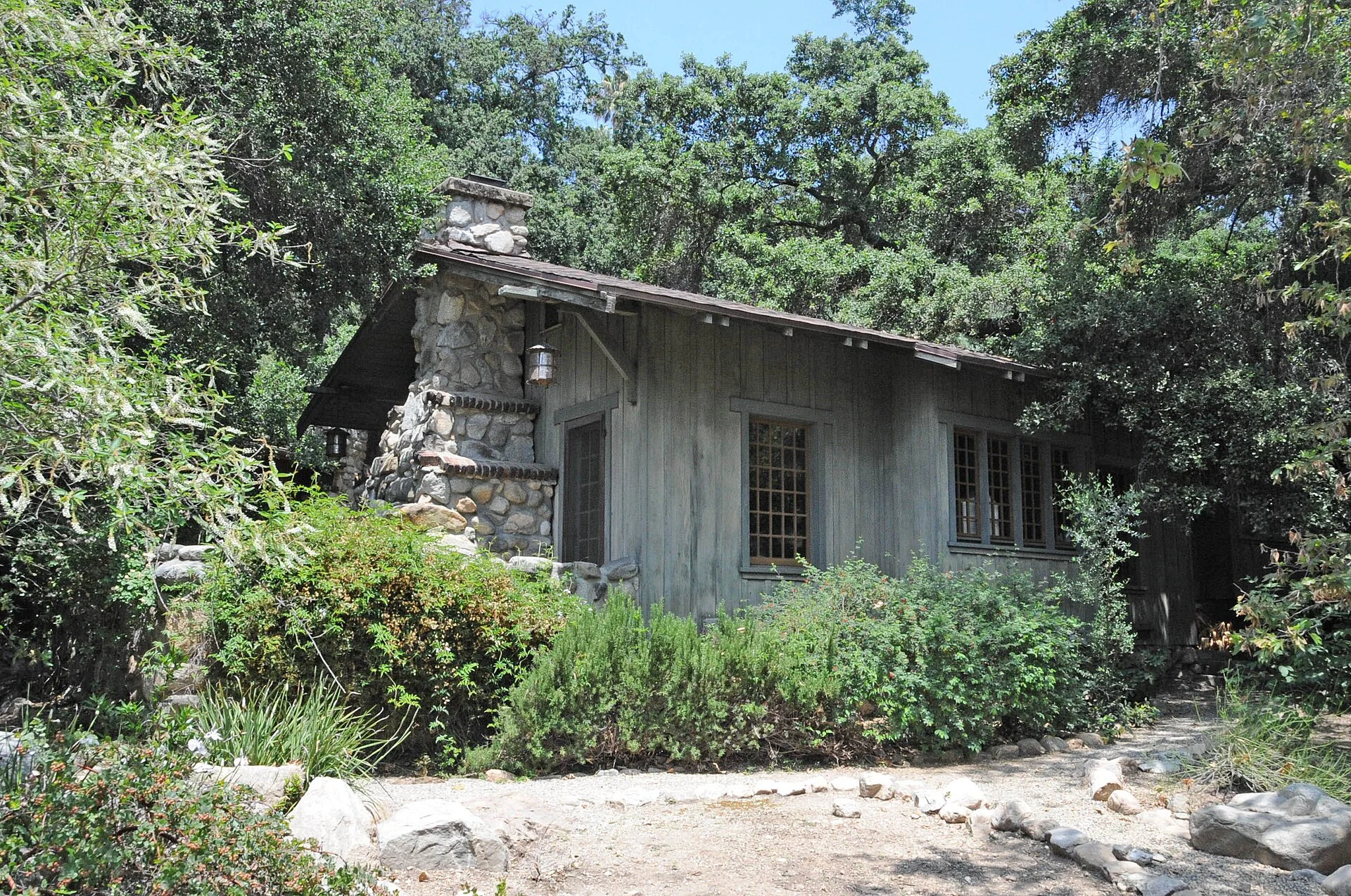
The Foothill Catalog Foundation unveiled its Foothill Catalog demonstration homes on Saturday, Oct. 24, with a ribbon cutting and block party on Tonia Avenue in Altadena, according to a City News Service preview carried by MyNewsLA and the Foothill Catalog event listing. The four buildings, two houses and two accessory dwelling units on neighboring lots at 3339 and 3349 Tonia Ave., were built from house plans that Los Angeles County has already approved. The goal is to let Eaton fire survivors walk through a finished rebuild before they commit to one.
An accessory dwelling unit, or ADU, is a smaller second home on the same lot as a main house. A demonstration home is a model built to be toured and studied. In this case, City News Service (CNS) reported that the completed homes will be transferred at cost to Eaton fire survivors through the Greenline Project. That means the families pay what the homes cost to build, not a market price.
The short version
- Two houses and two ADUs built from county pre-approved standard plans are now standing on Tonia Avenue, according to the Foothill Catalog demonstration homes page.
- The Foothill Catalog Foundation built them with builder Williams Rebuild and the Callahan Family Foundation.
- Eaton fire families will receive the homes at cost through Greenline.
- Nearly two years after the fire, only a small share of Altadena rebuilds are finished. Pre-approved plans are one of the few tools designed to shorten the design and permit stage.
- An architecture tour is set for Nov. 14, and the current set of pilot plans expires at the end of 2028.
How Altadena got here
The Eaton fire started on Jan. 7, 2025, burned 14,021 acres and was contained on Jan. 31, according to Cal Fire figures cited by CNS. It killed 19 civilians, destroyed 9,419 structures and damaged 1,076 more. Much of that loss was in Altadena, an unincorporated community with no city government of its own. Los Angeles County handles its zoning, permits and inspections.
Rebuilding has moved slowly. An August Pasadena Now report covered an analysis of county data that Alex Athenson presented to the Altadena Town Council. It found that about 57% of affected single-family lots had submitted a permit application, more than 3,000 permits had been applied for, and 91 rebuilds, about 2%, were complete. Rebuilt homes averaged 402 square feet larger than the homes they replaced, and 35% included an ADU.
The state's Rebuilding LA dashboard showed 4,013 applications and 3,728 permits issued in unincorporated LA County when we checked it this week. Projects averaged 221 calendar days from application to permit, and only 43 of those days, on average, were spent in agency review. Most of the remaining time falls outside the county's hands, such as when plans go back to owners and designers for corrections. These figures update often.
Money is the other bottleneck. In a March release from Supervisor Kathryn Barger, Barger said only about half of the more than 6,000 households that lost homes had applied to rebuild, and she pointed to financial barriers as a major reason.
How a pre-approved plan works
A pre-approved standard plan is a house design the county has already checked against current zoning and building codes. According to LA County Planning, plans for the Eaton burn area also comply with the Altadena Community Standards District and the area's residential design standards. A community standards district is a set of local zoning rules layered on top of county code, covering things like building size and placement. We covered the current review of those rules in our explainer on the Altadena CSD.
The county page lays out the process:
- The owner licenses the plan directly from its designer. The county does not endorse any designer.
- The plan cannot be customized. Any change sends the project into standard review. The Foothill Catalog homeowner FAQ says a mirrored layout is the one allowed exception.
- Each project still needs a site-specific review. That is where lot conditions such as slope, drainage, utility connections or a septic system come into play.
- There is no Planning fee for the initial zoning review. Building and Safety still charges for plan check, which is the review of construction drawings, and hourly fees apply to site review.
The county page also cites Executive Order N-29-25, a 2025 order from Gov. Gavin Newsom that lets fire rebuilds use the 2022 California Building Code. Because the pilot plans rely on that code, they expire on Dec. 31, 2028. Some plans may also qualify as like-for-like rebuilds, a faster path for homes rebuilt close to their former size and footprint. UCLA's Latino Policy and Politics Institute found like-for-like was the most common permit path early in the recovery, at 68% of filings in its 2025 "Who's Coming Home?" data brief.
Much of the burn area is mapped as a Very High Fire Hazard Severity Zone, the state's highest wildfire risk rating, which brings stricter building rules. TIME reported that the Foothill Catalog plans are designed to meet those rules with noncombustible exteriors, ember-resistant vents and Class A roofs, the most fire-resistant roof rating.
What is in the Tonia homes
According to the foundation's April announcement on PR Newswire, the Lexington is a 1,722-square-foot California bungalow with three bedrooms and two baths, paired with the Opa, a 495-square-foot studio ADU. The Elizabeth is a 1,600-square-foot house inspired by English cottages, also with three bedrooms and two baths, paired with the Lily, a 575-square-foot ADU with one bedroom and one bath. The foundation used the project as a teaching site, with a four-part public build series on May 30, June 20, Aug. 29 and Sept. 12.
On cost, the Foothill Catalog FAQ says plan licenses run $5 per square foot for fire survivors and $10 for other buyers, so a 1,500-square-foot plan costs a survivor $7,500. It also says construction has averaged about $450 per square foot in the Altadena and Pasadena area, based on bids the foundation has seen. At that rate, the same 1,500-square-foot house would cost roughly $675,000 to build before site work. TIME reported that custom architecture for a home can run past $100,000.
Who is behind it and why
Alex Athenson and Cynthia Sigler started the foundation about a week after the fire. TIME reported that they took inspiration from the Sears catalog homes of the early 1900s, which buyers ordered as complete kits. The county had no pre-approval process at the time, so they worked with officials to create one. The first plan, a 1,200-square-foot design called the Lewis, was approved by mid-June 2025. TIME counted more than 70 plans and more than 100 homeowners who had picked a design, and Pasadena Now's August report counted 101 families signed on and 43 homes under construction.
The Greenline Housing Foundation handles the handoff. Its Eaton fire program page says it has bought six properties through land banking, which means buying lots and holding them so they can be rebuilt for local families instead of sold to outside investors. It also offers up to $250,000 per family in rebuild support. CNS reported that more than 130 families are getting rebuild help through Foothill Catalog and its partners, and that Rep. Judy Chu, state Sen. Sasha Renée Pérez, Barger and county Public Works Director Mark Pestrella were expected at the opening.
Limits and open questions
- Layouts are fixed. A family that wants to move a wall or add a room loses the fast path.
- The time and cost savings come from the foundation's own comparisons, which have not been independently audited. The state dashboard also suggests most permit delay sits outside agency review.
- The plan is the cheap part. A $7,500 license does little for a family that cannot fund a build near $675,000, which is the financial gap Barger's office has described.
- About 100 families using catalog plans is meaningful, but thousands of affected lots still have no permit.
- UCLA's brief found investors made up most buyers of the fire-damaged lots it tracked in 2025. Land banking and at-cost transfers push the other way, but at a small scale so far.
What happens next
AIA Los Angeles, the local chapter of the American Institute of Architects, has a paid tour of the Foothill Catalog demonstration homes scheduled for Nov. 14 at 11 a.m. After that, the completed homes move to fire-affected families through Greenline. As of May, the Foothill Catalog FAQ listed 56 county-approved plans with eight more in development, plus five plans approved by the City of Los Angeles for Palisades rebuilds.
Pasadena Now's August report found permit applications peaked in September 2025 and have declined since. The open question is whether finished homes on the ground pull hesitant owners back into the process before the 2028 expiration.
What it means for LA agents
- Check plan fit before pricing a lot. Whether a pre-approved plan works with a lot's size, slope and CSD rules affects how fast a buyer can build, and that affects what the lot is worth.
- Use current construction numbers. The foundation's average of about $450 per square foot and the state dashboard's permit timelines are better starting points than pre-fire comps.
- Watch the 2028 deadline. Plans tied to the 2022 code expire Dec. 31, 2028, which matters for buyers who plan to hold a lot before building.
- Know the nonprofit buyers. Sellers who want their lot to stay with a local family can weigh land-banking programs like Greenline's alongside investor offers.
- Walk the homes. The Tonia Avenue houses show clients what a 1,600- to 1,722-square-foot catalog rebuild looks like in person.